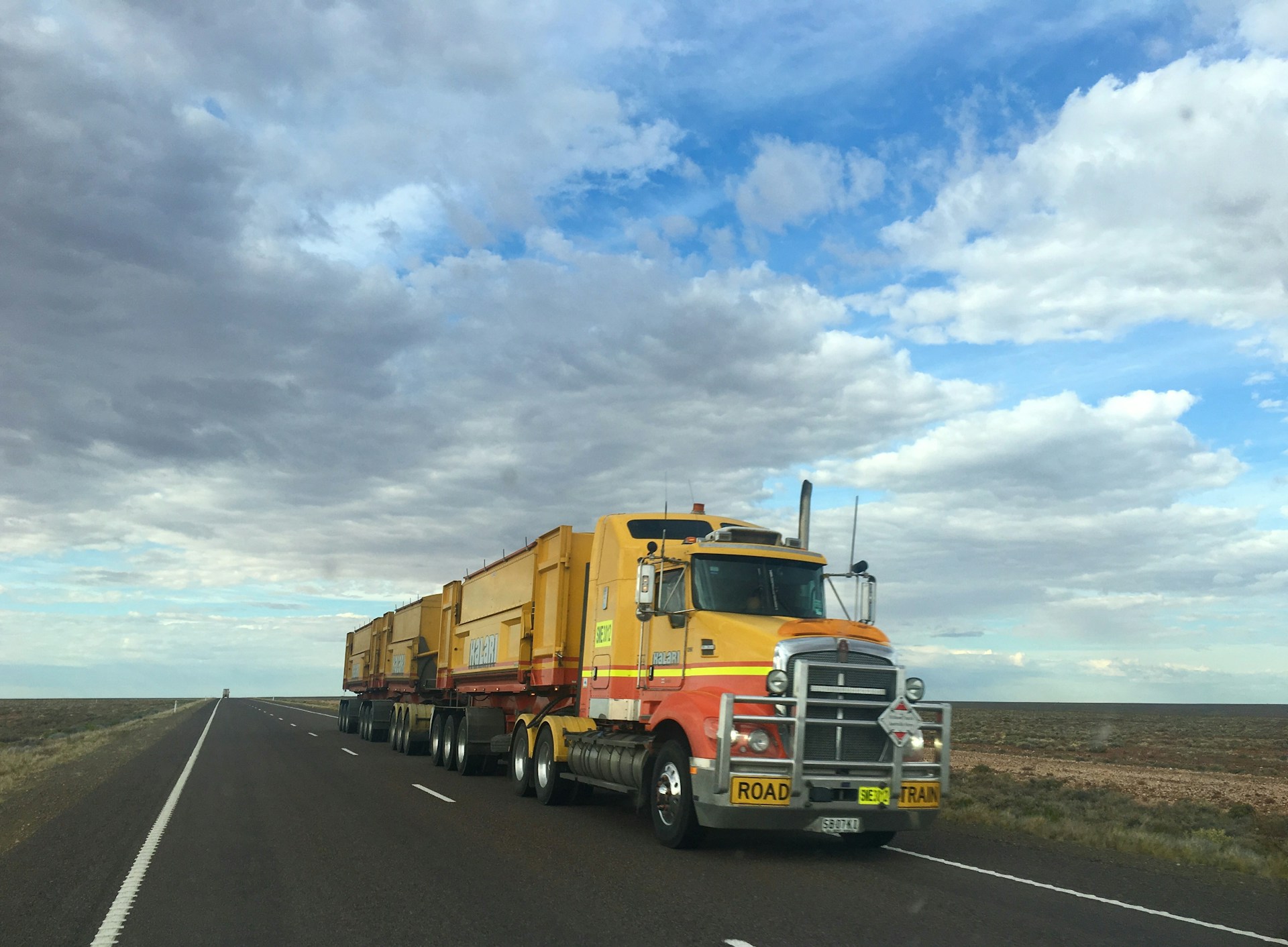
Diesel Shock, Slow Recovery: What the Strait of Hormuz Crisis Is Still Costing Australian Freight
Sep 03, 2026
Six months on from the price spike, fuel surcharges are still doing the damage — and the operators managing it best are the ones who stopped treating it as a temporary blip early.
What actually happened
In late February 2026, US and Israeli strikes on Iran triggered a disruption to the Strait of Hormuz — the shipping chokepoint that carries roughly 20% of the world's traded oil. The market reaction was immediate and brutal. Brent crude peaked at around US$126 a barrel, and the effects hit Australian bowsers within days.
Melbourne diesel prices tell the story on their own:
3 March 2026: 165.6¢/L
24 March 2026: 295.1¢/L
Increase: 78.2% in 21 days
Every major container shipping line — Maersk, CMA CGM, Hapag-Lloyd, MSC and others — rolled out Emergency Bunker Surcharges within weeks. On the road transport side, the flow-through was just as direct: every 5¢/L rise in diesel adds roughly 1% to an operator's fuel levy.
Why Australia felt it harder than most
Australia's exposure here isn't incidental — it's structural. The country imports more than 90% of its refined fuel, with close to 30% of that processed through refineries in Singapore and South Korea that themselves depend on Middle Eastern crude. On top of that, Australia holds only around 34 days of diesel in reserve, well short of the International Energy Agency's 90-day benchmark for member countries.
That combination — heavy import dependence, a chokepoint-exposed supply chain, and thin domestic reserves — means a shock on the other side of the world reaches an Australian truck's fuel tank faster, and harder, than it does in most comparable economies.
The part that matters now: this isn't over
The initial spike has eased, but industry analysts aren't calling this resolved. The current guidance is to plan for elevated diesel pricing persisting for 12 to 36 months, not treat the past six months as a one-off event that's now behind us. Fuel surcharge structures that were adjusted in March as an emergency measure are increasingly looking like the new baseline, not a temporary loading.
For carriers and owner-drivers, that changes the calculation. A fuel levy renegotiated as a short-term fix in March needs to be revisited as a standing cost input for every quote going into 2027 — not left on autopilot.
What carriers and shippers should be doing about it
Revisit your fuel levy mechanism, not just the number. If your levy is still pegged to a pre-crisis base rate or reviewed only annually, it's already out of date. Tie it to a published index (like the ATO's fuel tax credit rates or a recognised diesel price benchmark) and review it monthly while volatility remains elevated.
Price the return leg, not just the outbound. With fuel eating a bigger share of margin, an empty return leg costs more than it used to. Backloading isn't just efficient anymore — it's the difference between a profitable route and a loss-making one. This is exactly the gap a load board like FreightHub is built to close: filling the empty return leg with a paying load instead of running it back empty.
Check your fuel tax credit claims are current. Rates are reviewed periodically by the ATO — if your bookkeeping hasn't been updated since before the crisis, you may be under-claiming.
Build volatility into contracts, not just spot rates. Shippers negotiating long-term freight contracts should expect (and budget for) a fuel-linked variable component. Locking a flat rate through 2026–27 shifts all the fuel risk onto the carrier — a position most operators can no longer absorb.
The bottom line
The Strait of Hormuz shock was a geopolitical event, but its aftershock in Australian freight is now a structural cost problem. Diesel at these levels isn't an anomaly to wait out — for the next one to three years, it's the operating environment. The carriers who adjust their pricing models now, and who get smarter about eliminating empty kilometres, will be the ones still standing comfortably on margin when the next shock comes.
---
Sources: Corelog, "Fuel Surcharge Australia 2026: Melbourne Diesel Prices" (corelog.com.au); Australian Taxation Office, Fuel Tax Credit Rates.
Latest News
NHVR & NTC Statutory instruments ahead of HVNL
Jun 01, 2026
Live and Free - Freighthub is now online and ready
Dec 16, 2024